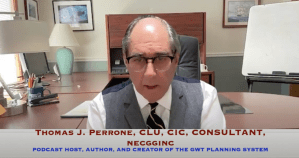
The Most Important Document a Sole Proprietors Needs 


By Thomas J. Perrone, CLU,CIC NEW ENGLAND CONSULTING GROUP OF GUILFORD, INC.

It is an overlooked planning strategy. What happens to a sole proprietor’s business when they die? The business is a financial hub for the family. At death, the hub dries up. What will happen to the owner’s financial support for the family? What can be done to protect this fiscal impact? Along with the death of the business owner, there is the business’s assets, such as, equipment, receivable, inventory, and other business property. What happens to this property? Are the heirs in a position of receiving the top dollar for what is to be sold?

Most business owners spend years building their companies. They develop relationships with customers, employees, vendors, and suppliers. They create systems, build a reputation, and work hard to make the business successful.

For many owners, the goal is either to pass the business to their family or to sell it at a future value providing financial security for themselves.

But there is a problem:

What happens to the business if the owner suddenly dies, becomes disabled, retires, or simply can no longer run it?

Without a plan, the future of the business—and the financial security of the owner’s family—can become uncertain very quickly.

That is why a sole owner should consider a One-Way Buy-Sell Agreement, sometimes called a unilateral buy-sell agreement.

A Buy-Sell Agreement Isn’t Just for Businesses with Multiple Owners

Many people associate buy-sell agreements with businesses that have two or more owners. However, a 100% owner can also use a buy-sell agreement to establish what happens to the business when a triggering event occurs.

A sole owner can enter into a One-Way Buy-Sell Agreement with:

  • Children or other family members
  • A trust
  • A competitor
  • An employee or group of employees
  • Another individual or entity interested in purchasing the business

The purpose is simple:

Create a predetermined path for transferring the business and provide liquidity to the owner’s family.

Instead of leaving the family to figure out what to do with the business after the owner’s death, the agreement establishes a framework before the crisis occurs.

What Happens If the Business Is Simply Left to the Children?

Leaving a business for one’s children may sound like an obvious solution.

But ownership does not automatically mean that the children are prepared to run the company.

Some children may have the experience and desire to operate the business. Others may not.

They may not understand the industry, have the necessary management skills, or even want the responsibility of owning the company.

And if they inherit the business and decide they want to sell it, they may be forced to sell under circumstances that are not favorable to them.

The market determines the value. Competitors may recognize that the family is inexperienced and attempt to purchase the company at a significant discount.

A properly structured buy-sell agreement can provide a much more orderly alternative.

What About Leaving the Business to a Spouse?

Similar issues can arise when the business is left to a spouse.

In many cases, the spouse’s primary concern will not be running the business. It will be replacing the income and financial security that the owner provided.

That can create tremendous pressure to sell.

A spouse who suddenly finds themselves responsible for a business they have never operated may understandably want to convert the business into cash as quickly as possible.

A One-Way Buy-Sell Agreement can establish a predetermined buyer and a method for determining the value of the business.

The agreement can be funded with life insurance or, depending on the circumstances, through the future cash flow of the business.

What If a Competitor Is the Buyer?

A competitor can be an attractive buyer because it may already understand the industry and recognize the value of the company.

More importantly, a properly structured agreement can establish the price and terms in advance.

This can help protect the owner’s family from negotiating with potential buyers at a difficult and emotional time.

What If Some Children Want the Business and Others Don’t?

This is another situation that should be addressed before it becomes a problem.

Perhaps three children inherit the business; only one wants to do it.

Or one child has spent years working in the company and understands how to run it, while the other children have little or no business experience.

The agreement and the owner’s estate plan should address these differences.

The children who want to own and operate the business may have an opportunity to purchase the interests of those who do not want to participate.

Other assets can potentially be used to equalize inheritance among children.

The critical point is to make these decisions before the family is forced to put them under pressure.

Six Questions That Should Be Answered

If children or other family members will eventually own the business, the buy-sell agreement should address some fundamental questions:

  1. Who will control the business?
  1. What happens if one owner wants to sell?
  1. Can an owner sell their interest to an outsider?
  1. Does another family member have a right to refusal?
  1. How will the business be valued?
  1. What are the terms of a future purchase or sale?

These questions may seem straightforward today.

They can become extremely complicated after the owner is gone.

What Should a One-Way Buy-Sell Agreement Address?

A well-designed agreement should go beyond simply stating who can purchase the business.

  1. Future Owners Should Be Bound by the Agreement

If ownership is transferred to another person, the agreement should provide a mechanism requiring subsequent owners to become subject to its provisions.

Otherwise, the original agreement may lose much of its effectiveness over time.

  1. Establish a Valuation Process

Business value changes over time.

Rather than waiting until a triggering event occurs and then arguing about what the business is worth, the owner can establish a valuation process in advance.

One approach is to have the business valued periodically by an independent appraiser.

For example, the agreement could provide an annual or biennial valuation.

A consistent valuation process can help establish a history of the company’s value and reduce disagreements when a transaction eventually occurs.

  1. Restrict Transfers to Outsiders

The agreement can establish restrictions on transferring ownership of interest to someone outside the designated group.

It can also provide remaining owners or family members with a right to first refusal.

This can help prevent an unwanted third party from suddenly becoming an owner.

  1. Establish the Terms of a Future Transaction

Price is only one part of a business transaction.

The agreement should also establish the terms under which a future purchase may occur.

How will the purchase be paid?

Will there be installment payments?

What happens if the business does not have enough cash?

These issues should be addressed before they become problems.

  1. Identify Triggering Events

Death is not the only event that can create the need for a buy-sell agreement.

Other triggering events may include:

  • Retirement
  • Disability
  • Termination
  • Voluntary departure
  • Other circumstances that make continued ownership or management impractical

The agreement should clearly identify the events that activate its provisions.

  1. Address Funding

Having an agreement to purchase the business is one thing.

Having the money to complete the purchase is another.

The agreement should address how the purchase will be funded when a triggering event occurs.

Depending on the circumstances, funding could involve life insurance, business cash flow, financing, or other sources.

The agreement should not simply identify the buyer. It should provide a realistic mechanism for completing the transaction.

Who Should Be Concerned About a Buy-Sell Agreement?

The Business Owner

The owner has spent years building the business.

Without a plan, the future of the company can be left to chance, potentially creating confusion and disagreements among family members and other interested parties.

The Family

For many families, the business represents a sizable portion of their financial resources.

It may also represent their future source of income.

The family should know what is supposed to happen to the business and how its value will be converted into financial security.

The Owner’s Advisers

A One-Way Buy-Sell Agreement should not be viewed as a document that exists independently from the owner’s overall planning.

The owner’s attorney, CPA, insurance professional, financial adviser, and business transition or exit-planning professional may all have important roles in designing and implementing the plan.

Each adviser brings a unique perspective, and coordination among them can improve the likelihood of achieving the owner’s objectives.

The Real Reason a Sole Owner Should Have a Buy-Sell Agreement

There is one important reason for a sole owner to have a plan.

The owner knows the business better than anyone else.

The owner has developed relationships with customers, employees, vendors, suppliers, and other stakeholders that have helped make the business successful.

The owner has also developed an instinct for making the decisions necessary to keep the company moving forward.

When that owner suddenly disappears because of death, disability, or another triggering event, the business experiences a transition.

Customers may have questions.

Employees may be uncertain.

Vendors may become concerned.

Family members may not know what to do.

Potential buyers may see an opportunity to negotiate from a position of strength.

A One-Way Buy-Sell Agreement cannot eliminate every challenge associated with the loss or departure of an owner.

But it can provide something extremely valuable:

Clarity.

It can establish who will acquire the business, how the business will be valued, what the transaction terms will be, and how the owner’s family can receive the value that has been created.

For a business owner who has spent years building a valuable company, that may be one of the most important parts of the overall business transition plan.

Building a business is difficult. Protecting the value you have created should not be left to chance.

Article related:   Single appraiser buy and sell agreement


The Cheapest Way to fund your Buy and Sell Agreement – article- Download your free article

Let’s discuss the topic: Toms Calendar

tperrone@necgginc.com


Where You Are – Where You Could Be!

Why an Annual Review Is the Most Overlooked Step in Business Owner Planning

By Thomas J. Perrone, CLU, CIC | Founder, New England Consulting Group of Guilford, Inc.

Ask most business owners how their planning is doing, and they’ll tell you it’s fine. They’ll say it with confidence, too — the same way most of us would say we feel healthy on any given day. But ask that question in the middle of a CT scan, and the confidence tends to disappear. The difference isn’t your health. It’s what you can’t see.

Business owner planning works the same way. The plans you built years ago may have looked airtight the day you signed them. But time passes, tax law changes, your business changes, and your family’s needs change — and none of that shows up on the surface. The documents still sit in the drawer looking just as official as they did the day you filed them. What they don’t tell you is whether they still fit.

We get the documents completed and executed, feel good about it, and then one morning realize it’s been five years — or more — since anyone looked at them again.

A Familiar Story

This pattern shows up constantly — with my clients, and with the professional colleagues I work alongside every day. The planning gets done. Everyone feels the relief of finally having “taken care of it.” Then life takes over, and the plan quietly ages in place while the world around it keeps moving.

The real risk isn’t skipping the planning altogether — most owners eventually get that part done. The risk is discovering, years later, that Washington has rewritten the rules, your business has grown or changed shape, your family situation is different, and no one ever flagged it. If any of those shifts would have changed your strategy, the only real question worth asking is: when would you have wanted to know?

Building the Fix Into the System

This is exactly the problem I built the GWT Planning System® to solve. GWT stands for Growth, Wealth, and Transition — the three areas every business owner’s planning needs to work together, not in isolation. But good structure alone isn’t enough. A plan that’s well designed on day one and never revisited is still a plan that goes stale.

So, from the very beginning, the GWT Planning System® was built with an automatic annual review woven directly into it — not an optional add-on, but part of how the system runs. Every year, that review happens. Sometimes it’s in person. Sometimes it’s a phone call. Sometimes it’s a Zoom conversation. The format isn’t the point. The consistency is.

That built-in review does three things for every client:

  • It catches tax and legal changes coming out of Washington before they quietly undermine a strategy that used to work.
  • It keeps the plan aligned with the business itself, which rarely looks the same from one year to the next — revenue, staffing, ownership, and value all shift.
  • It accounts for changes at home — a marriage, a health event, a child’s changing role in the business, a shift in retirement timing.

The Most Critical Part of Planning

Over more than fifty years of doing this work, I’ve come to see this as the most important part of what I do — not just putting the right plan in motion but making sure it stays right as everything around it keeps changing. A plan is not a document you finish once. a relationship you maintain.

If you can’t remember the last time your plan was reviewed against today’s tax law, today’s business, and today’s family circumstances, that’s worth changing before it becomes a costly surprise. The goal isn’t to redo the planning every year — it’s to know, every year, exactly where you stand and where you could be.

The goal isn’t to redo the planning every year — it’s to know, every year, exactly where you stand and where you could be.

If it’s been a while since your plan had a real second look, let’s put one on the calendar.

tperrone@necgginc.com

Questions? Call me.  My Calendar

Download Your Free GWT Report- Learn how the GWT Planning System® can be your pathway to solid up to date planning and help you with decisions for the future:  Click

Are you Building your Business by Design…or by luck?

THREE WAYS TO GROW YOUR BUSINESS WEALTH! 

Business owners get confused as to the purpose of their business. They put most of their time into their business with the hope of good business growth and future security.  However, in many cases, they are not updated on the most effective way of using their cash flow to create outside wealth. There are three ways to use your business to create personal wealth and and economic future. 

Thomas J. Perrone, CLU, CIC – NEW ENGLAND CONSULTING GROUP OF GUILFORD, INC

Growing value in your business can create tremendous wealth, however, only 15-30% of the small businesses will sell, which creates the “if factor”, the unknown.  

The percentage of sales is lower for the smaller owned business, more like 15%.  

Building your business to its highest potential value is possible by having guidelines of what must be done as you grow the business.  

To hedge the “what if’s” of selling it, you can use the cash flow of the business to create other assets such as executive compensation and qualified benefits and plans.   

Many owners neglect to consider these options and end up with too much wealth in their business, causing liquidity and tax problems when they leave, die or become disabled. This presents the problem of “how do you get your wealth out of your business on a tax advantaged method” when you want to leave the business and you need it?  

Building Your Business to Sell in The Future! 

Here is a list of strategies that will help in growing a robust business and greatest potential value.  

  • Develop value drivers  
  • Create a culture- employees come to you because of it 
  • Develop a middle management 
  • Systematize your business 
  • Customer diversification  
  • Avoid being dependent on a few customers for your sales  
  • Marketing plan- and always update it and analyze it 
  • Focus on growth of revenue, lowing of costs 
  • Protect yourself from litig 
  • Make sure you protect yourself such as  
  • Fund your Buy & sell agreements, bank loans, audit your liability insurance, protective documents, etc. 
  • Have a strategy to sell or transition your business, such as growing the middle management, and key people to step in and run the company, or even buy it. This is a long-term process, but you must put things in order and work on strategies to get the greatest potential value from the business.  

When Considering Using Your Business Cash Flow to Develop Executive Compensation and Other Benefits,  

Such as:  

  • Executive Compensation plans, where the company contributes to the plan, and you as owner pay as little as 2% in taxes on the contribution.  
  • Salary Continuation and deferred compensation arrangements for you.  
  • Deposit into your company’s retirement plan (like 401k, profit sharing, 403b, etc.). However, if you are a “high earning business owner”, do not load up on 401k contributions and other contributory plans as the tax consequences are severe.  
  • Make sure your buy and sell agreements are funded and updated. Make sure they cover at least the seven major triggers (death, disability, voluntary and non-voluntary termination, divorce, bankruptcy, retirement).  
  • Have critical illness plans set up such as medical reimbursement plans, disability, and health coverage.  
  • Tie your major Key group to your company as they are the value of the company and contribute to the cash flow of your company, allowing you to implement these strategies.  
  • Create vested benefit schedules to keep them with you  
  • Have a company evaluation /appraisal periodically.  
  • Focus your attention on growing sales, as all things point to sales revenue. 

Executive Compensation Is a Fantastic Way to Extract the Value of Your Company on a Tax-favored Basis, And Not Tie It Up in Your Company, Having It Available to You When Needed. 

Download the Jfk Era Benefit Report – Free- Learn how to create maximum benefits on a tax-advantaged strategy.  This is how savvy business owners use their business cash flow to create wealth! Download

Like to discuss:  Call me.  My Calendar

www.bpbpgrp.com/Tom

check this article out – When your Income Outgrows your 401k

When Your Income Outgrows Your 401(k): The Retirement Funding Problem for High-Earning Business Owners

Summary: Business owners can’t save enough for their retirement because of the cash flow demands. 401k, and profit sharing plans limit their contributions, consequently they don’t save enough for retirement and have to depend on the value of their company for their future security. Unfortunately, only a small percentage of companies sell. This creates the Gap in their retirement planning.

By Thomas J. Perrone, CLU, CIC

One of the biggest retirement planning problems facing successful business owners is not earning enough money to retire.

It is the inability to put enough money into a traditional 401(k) or other contributory retirement plan to replace the income they are accustomed to earning.

For many business owners, this problem becomes especially important during the final three to five years before retirement.

The Contribution Limitation Problem

A business owner may be earning $250,000, $300,000, $400,000, or more per year. Naturally, as retirement approaches, the owner wants to accumulate enough retirement capital to maintain a reasonable percentage of that income.

The problem is that a traditional contributory retirement plan does not necessarily allow the owner to contribute in proportion to his or her income.

The amount the owner can contribute may be affected by the plan’s design, employee participation, employee compensation, nondiscrimination requirements, and applicable contribution limits.

This creates an important question:

How do you fund the retirement needs of a highly compensated business owner when the traditional retirement plan limits how much that owner can put away?

Consider a Simple Example

Imagine a business owner earning $250,000 per year.

Now compare that owner with an employee earning $100,000 per year.

Both may participate in the same 401(k) or contributory retirement plan. Yet the business owner’s retirement income need is substantially greater.

If the owner wants to retire at a level that is reasonably close to his or her final earnings, the amount that can be accumulated through the traditional plan may not be sufficient.

The employee earning $100,000 may have a much more manageable retirement funding objective.

The owner earning $250,000 has a much larger gap to fill.

And this becomes even more significant when the owner is only a few years from retirement.

The Last Three to Five Years Can Be Critical

Many business owners spend decades building their companies.

They reinvest profits.

They purchase equipment.

They hire employees.

They expand facilities.

They build working capital.

They grow the value of the business.

As a result, much of their wealth may remain inside the business rather than inside a retirement account.

Then, three to five years before retirement, the owner begins asking:

“How am I going to turn the value I’ve created in my business into retirement income?”

That is when the limitations of a traditional contributory retirement plan can become particularly apparent.

Trying to solve a lifetime retirement accumulation problem during the final few years with a plan that has contribution limitations may simply not work.

The Real Issue May Not Be Your Retirement Plan

This is why I believe business owners need to look beyond the question:

“How much can I contribute to my 401(k)?”

The more important question may be:

“How am I going to convert the wealth I’ve created in my business into the retirement income I want?”

Those are two very different questions.

A 401(k) is an important retirement planning tool. But for a successful business owner, it may be only one piece of the overall strategy.

The business itself may represent the owner’s largest asset.

The challenge is developing a coordinated strategy for:

  • Building business value
  • Protecting business value
  • Accumulating retirement assets
  • Creating additional sources of retirement capital
  • Reducing unnecessary taxes
  • Preparing the business for transition
  • Converting business equity into personal wealth

Don’t Wait Until Retirement Is Five Years Away

The earlier this issue is addressed, the more alternatives may be available.

If you are a business owner earning substantially more than your employees, don’t assume that maximizing your 401(k) contribution automatically means you have maximized your retirement planning.

Your business may be producing significant income today while simultaneously creating a retirement funding gap for tomorrow.

Most business owners don’t have a retirement savings problem. They have a business planning problem.

The goal should not simply be to put as much money as possible into a qualified retirement plan.

The goal should be to develop a coordinated strategy that allows you to grow, protect, and eventually transition the value of your business into the financial resources you will need after you stop working.

That requires looking at the entire picture—not just the retirement plan.

The Bottom Line

If you are a highly compensated business owner, especially one earning $250,000 or more, take a close look at the relationship between your current income, your retirement income goal, your retirement assets, and the value of your business.

If there is a significant gap, don’t wait until the final few years to discover it.

Your business may be your greatest retirement asset—but only if you have a plan for turning its value into personal wealth.

DOWNLOAD YOUR FREE “JFK ERA BENEFITS REPORT FOR BUSINESS OWNERS” and learn how high earning business owners are creating tax advantaged retirement plans.

CLICK HERE

Video:  Endorsement RETIREMENT PLAN

If you have an interest in discussing your planning please call.

Tom’s Calendar

The Cheapest Way to Fund a Buy-Sell Agreement

By Thomas J. Perrone, CLU, CIC

Picture this: you and your business partner built something real together. Four million dollars in value, split fifty-fifty. Then, out of nowhere, your partner passes away. His widow now owns half your company. She doesn’t want to run it. She wants her money — now.

If that thought makes your stomach drop, you’re not alone. And here’s the uncomfortable truth: having a buy-sell agreement doesn’t mean you’re actually prepared for this moment.

Your Buy-Sell Agreement Is Only Half the Plan

Most business owners think a buy-sell agreement has them covered. It names a price. It names the terms. It says, in black and white, what happens when a partner leaves — through death, disability, divorce, or simply deciding to walk away.

But an agreement is only the what. It says nothing about the how. How does the money actually move from the surviving owner’s pocket into the widow’s hands? That question is where most buy-sell arrangements quietly fail — not in a courtroom, but at the bank, when it turns out the cash simply isn’t there.

Without a funded plan, owners are usually left with one of three bad outcomes:

– A fire sale — the business gets sold fast, often to a stranger, just to raise the cash.

– A forced partnership — you end up running the company with someone who never wanted to be your partner.

– The bank calls the loans — lenders get nervous about ownership uncertainty and tighten the noose.

None of that is good. And all of it is avoidable — if you fund the agreement properly, ahead of time.

The Three Ways to Fund a Buyout

Let’s use a simple example: a $4 million business, owned 50/50, with a $2 million buyout obligation. There are three real ways to cover that number.

Option 1: Cash

The instinct for a lot of owners is to just save up. Sounds responsible enough — until you run the numbers.

If your business generates $400,000 a year in distributable profit, split evenly, that’s $200,000 per partner. To fully self-fund a $2 million buyout, you’d need to set aside your entire share of profit for ten years. No raises. No reinvestment. No growth. Just money sitting there, doing nothing, in case the worst happens.

And here’s the problem nobody wants to say out loud: what if the event happens in year two? You’re $200,000 into a $2 million obligation, and your business has spent two years running on fumes because all its profit was parked in a savings account instead of working.

Cash funding only works in one scenario: if you never actually need it. The moment you do, it’s never enough.

Option 2: Borrowing

The next instinct is to borrow — a bank loan, or a note payable to the estate over time.

On a $2 million buyout, financed over ten years at 7%, you’re looking at roughly $28,000 a month. Over the life of that loan, total interest adds up to about $800,000 — money that leaves your business permanently and goes straight to the bank.

And the interest isn’t even the biggest problem. Borrowed money comes with strings: personal guarantees, the business pledged as collateral, and payments due no matter what — recession or not, lost customers or not. On top of that, a departing partner’s estate has little reason to accept a slow note when the agreement says they’re owed full value now. Notes get renegotiated. Disputes happen. And the business you’re trying to protect ends up in court anyway.

Cash starves the business. Debt mortgages it. Which brings us to the option that actually works.

Option 3: Life Insurance

Here’s the idea, and it’s refreshingly simple. You take out a life insurance policy on your partner. The business — or a properly structured trust — owns the policy and pays the premium. When your partner passes away, the death benefit arrives tax-free, within weeks. That’s your buyout, fully funded, on the spot. No fire sale. No note. No bank involved.

For a healthy partner in his fifties, a $2 million death benefit typically costs somewhere between $20,000 and $40,000 a year in premium, depending on how it’s structured.

Now compare that to the alternatives:

| Funding Method | Cost Profile | Key Risk |

  1. Cash (self-funded) | $200K/yr of profit for 10 years | Starves the business; badly exposed if the event happens early |
  2. Borrowing | ~$28K/mo; ~$800K in total interest | Collateral, personal guarantees, payments due regardless of performance |
  3. Life Insurance (trust-owned) | ~$20K–$40K/yr premium; full coverage from day one | Requires correct ownership structure and an insurable partner |

The number that tends to get people’s attention: a trust-owned life insurance approach runs roughly 74% less expensive than the next best option. And unlike cash, the coverage is fully in place from day one — not after a decade of saving.

How to Structure the Policy

Once you’ve decided insurance is the right tool, you still have to structure it correctly. There are two standard approaches.

Cross-purchase agreement. Each partner personally owns a policy on the other. When one dies, the survivor collects the death benefit and buys the deceased partner’s shares directly. Simple, clean, and it works especially well with two partners.

Entity purchase (stock redemption). The business itself owns the policies and buys back shares from the deceased partner’s estate. This tends to be easier to administer when there are three or more partners involved.

Which one is right depends on your entity type. C-corporations can run into alternative minimum tax issues under certain structures. S-corporations raise their own questions around ownership and basis. This is exactly the kind of decision that shouldn’t come from a template you found online — the structure you choose has tax consequences that can follow your family for a generation.

The Advanced Move: Trust-Owned Insurance and Key Person Coverage

If you want to do this the smart way, there’s a more sophisticated layer worth knowing about.

Irrevocable life insurance trusts. Instead of you or the business owning the policy, a trust owns it. Why bother? Two reasons. First, it keeps the death benefit out of your taxable estate — for owners with real net worth, that can mean millions in estate tax the family never has to pay. Second, the trust controls the timing and terms of the payout, so the proceeds go out exactly as the agreement says, instead of becoming a bargaining chip.

Key person insurance. This is a different tool entirely — it protects the business, not the ownership transfer. If you’ve got a key employee who runs operations or holds your most important customer relationships, their death would hit the business hard: lost revenue, lost relationships, a scramble to replace them. Key person coverage puts cash into the business to bridge that gap. It’s not for the buyout. It’s for survival. Any business with roughly five to fifty employees should have this on the radar.

Four Mistakes That Cost Owners the Most

1. Buying term insurance that expires. Buy-sell needs are permanent — you can’t predict the year something happens. Permanent coverage is the honest answer.

2. Getting the policy ownership wrong. If the person who owns the policy isn’t the same person who owes the buyout, the death benefit can trigger a tax problem and defeat the whole plan.

3. Letting the valuation go stale. The agreement says $4 million, but the business is now worth $9 million. That’s not a plan anymore — it’s a time bomb.

4. Assuming your partner is insurable. If there’s a health issue, you want to know now, while you can still get coverage — not after it’s too late.

What to Do This Week

You don’t need to overhaul everything today. Start here:

1. Pull your buy-sell agreement and ask the honest question: is this actually funded, or does it just look funded on paper?

2. Get a life insurance illustration on your partner. Just the numbers — no commitment required.

3. Have the conversation with your partner. It’s awkward, sure. But it’s a lot less awkward than the widow, the fire sale, or the bank calling your loans.

A buy-sell agreement is only as good as its funding. Of the three options — cash, borrowing, and life insurance — insurance, especially when trust-owned, is the one that’s cheapest, fastest, and most reliable when it actually matters. Get the funding question answered now, while everyone’s calm and thinking clearly, so the only thing left to work out later is the number.

Download your free BSA report Guide-  CLICK HERE

Check This Article called “Connolly Alternatives: 

Need to discuss:  Toms Calendar. 

Seven Things Buyers May Pay More for When Purchasing a Business


By: Thomas J. Perrone, CLU, CIC

How to Build a More Valuable and Transferable Company

Many business owners ask:

What is my business worth?

That is an important question. But an even more valuable question may be:

What can I do today to make my business worth more in the future?

When buyers evaluate a company, they are not simply looking at past revenue. They are evaluating the company’s ability to generate future cash flow—and the risks that could prevent that from happening.

Businesses with dependable earnings, strong customer relationships, capable employees, effective systems, and less dependence on the owner may be more attractive to buyers.

Here are seven things buyers may be willing to pay more for because you build the business around strong value drivers. 

1. Predictable and Growing Cash Flow

Revenue is important, but consistent profits and reliable cash flow are often more meaningful.

A company with steady earnings may be more attractive than a company with higher but unpredictable profits. Buyers want confidence that the business can continue generating cash after the sale.

Business owners should focus on improving profit margins, controlling unnecessary expenses, and creating a history of dependable financial performance.

2. Recurring Revenue and Strong Customer Relationships

Recurring revenue can make future earnings easier to predict.

Service agreements, subscriptions, maintenance contracts, memberships, and repeat customers may provide greater visibility into future revenue.

Buyers may also look at customer retention and customer concentration. A company that depends heavily on one or two customers may present more risk than a business with a broad and diversified customer base.

An important question is:

Are customers loyal to the company—or primarily loyal to the owner?

Customer relationships that can continue after the owner leaves may increase the company’s transferability.

3. A Business That Can Operate Without the Owner

Owner dependence can reduce business value.

If the owner is responsible for most sales, customer relationships, major decisions, and daily operations, a buyer may question what will happen after the owner leaves.

A useful test is to ask:

Could the company continue operating successfully if the owner were absent for 30, 60, or 90 days?

transferable it may become.

4. A Strong Management Team and Capable Employees

Buyers are not only acquiring the company’s assets. They may also acquire the knowledge and experience of their employees.

A capable management team can provide continuity and help the business maintain its performance after a sale.

Business owners should identify key employees, develop future leaders, and create strategies that encourage important people to remain with the company.

A business with leadership depth may be less dependent on any one individual.

5. Documented Systems and Operating Processes

Businesses are often more transferable when important processes are documented and repeatable.

Written procedures for sales, employee training, customer service, pricing, quality control, and financial management can help a buyer understand how the company operates.

Strong systems may also improve consistency, reduce errors, and make the business easier to manage.

The goal is to build a company that operates through reliable systems—not simply through the owner’s experience and memory.

6. A Sustainable Competitive Advantage

Why do customers choose your company instead of a competitor?

Your advantage may be a compelling reputation, specialized expertise, proprietary technology, a recognized brand, a unique service model, or long-term customer relationships.

The key is whether that advantage is sustainable and difficult for competitors to duplicate.

A strong competitive position may help protect customer relationships, support healthy profit margins, and create greater confidence in the company’s future.

7. Clean Financial Records and Lower Business Risk

Buyers need to understand the company’s financial performance.

Accurate and timely financial records can make it easier to evaluate revenue, expenses, profits, cash flow, and future opportunities.

Buyers may also examine risks involving customer concentration, debt, legal issues, insurance, technology, employee obligations, and ownership agreements.

Reducing risks can be just as important as increasing revenue.

The Common Factor: Buyer Confidence

These seven value drivers have one important thing in common:

Buyers may pay more when they have greater confidence in the future of the business. 

They want confidence that:

– Cash flow will continue.

– Customers will remain.

– Employees and management can operate the company.

– Systems are documented and repeatable.

– The company has a sustainable competitive advantage.

– Financial information is reliable.

– Business risks are identified and managed.

Two companies with similar revenue and profits may receive very different valuations because one is more predictable, less dependent on its owner, and easier to transfer.

Build Value Before You Need to Sell

Business owners should not wait until retirement is approaching to begin building value.

Improving cash flow, developing management, documenting systems, reducing owner dependence, and strengthening customer relationships may take years.

These improvements can benefit the owner even if the business is never sold. A stronger company may produce greater profitability, reduce owner stress, improve operational efficiency, and provide more choices for the future.

Through the GWT Planning System®, Business owners can evaluate where their company is today, identify opportunities to build and protect value, and develop strategies for converting business equity into future financial security.

The goal is not simply to build a business that someone else wants to buy.

The goal is to build a business worth owning, worth protecting, and worth paying more for. 

tperrone@necgginc.com

Wish To Discuss Lets Talk:  Toms Calendar

203.530.6615

Website: www.bpbpgrp.com/Tom

Resources:

Free Download Business Building Guide Call “  Growing Your Business On Purpose”

Podcast: What Buyers Really Look For When buying Your Business!

How to Identify and Solve the Problems Holding Your Business Back

A Simple Business Planning Process for Growth, Value, and Future Freedom

By Thomas J. Perrone, CLU, CIC

Most business owners are excellent at solving immediate problems — customer concerns, cash flow, staffing, vendor issues. What often gets neglected are the larger problems quietly limiting growth, value, and future options.

The greatest danger isn’t having problems. It’s failing to identify the ones that could affect your business’s future — and your own financial security.

That’s the purpose of the One Page Solution: a simple process for evaluating your company, identifying the most important issue, and taking manageable steps toward a solution — one problem at a time.

Growth and Transition Are Connected

Business owners tend to treat growth and transition as separate issues. They aren’t.

Growth is about the systems, people, and performance that build a stronger company. Transition is about your eventual exit — retirement, sale, family succession, or an unexpected disability or death.

The two are linked: greater profitability creates options for personal wealth and retirement security, while your personal goals (retiring in five years? reducing involvement? no clear successor?) shape the decisions you make in the business today.

The One Page Solution Framework

Start with one question: What is the most important problem that could prevent you from reaching your business and personal goals?

Then map it out:

  1. The problem — what needs addressing
  2. The consequences — what happens if it’s ignored
  3. The desired outcome — what success looks like
  4. The roadblocks — what could get in the way
  5. The action steps, owners, and timeline — who does what, by when
  6. The review process — how you’ll track progress

You don’t need to fix everything at once. One important problem. One practical solution. One step at a time.

A Job vs. a Business

Ask yourself: Could you leave your business for three months without checking in, and still expect it to run well?

If not, the company may depend too heavily on you — which means you’ve built a job, not a transferable business. A buyer doesn’t want to purchase your personal effort; they want a company with systems, culture, and a management team that can operate without you.

Identify Roadblocks Early

Every strategy has roadblocks — a management gap, an under-financed buyer, too much personal wealth tied up in the company. Naming these early gives you time to solve them before they become forced decisions driven by illness, a downturn, or an unplanned sale opportunity.

Small Steps, Coordinated Advisors

Building value and preparing for transition takes time, but the first step can be small: review your company’s value, document one key system, or schedule a meeting with your advisor team (accountant, attorney, financial advisor, valuation professional). Coordinating their efforts — not just having them — is what drives results.

Start With the Right Question

If you had to leave your business tomorrow, would it continue to succeed — and would you be financially prepared?

Your answer points to the one issue worth solving first. Identify it. Understand the consequences. Define the outcome you want. Then take the first step.


Ready to identify what’s limiting your company’s growth, value, or future options? Schedule a conversation to start building a practical strategy for building and protecting your business worth.

Thomas J. Perrone, CLU, CIC is a business planning professional, author, and host of the podcast Building and Protecting Your Business Worth.

About the Author

Thomas J. Perrone, CLU, CIC is a business planning professional, author, and host of the podcast Building and Protecting Your Business Worth. He works with business owners to help them build business value, protect the company from unexpected events, develop strategies for business transition, and convert business success into long-term personal financial security.

Ready to identify the problems that may be limiting your company’s growth, value, or future options?

Schedule a conversation to discuss your business goals and begin developing a practical strategy for building and protecting your business worth.


For A full Report Click Here:

tperrone@necgginc.com

www.bpbpgrp.com/tom

YouTube: THE THREE UNAWARE MISTAKES business owners make!

POdcast: Hidden Dangers Every Business Owner Needs to Address

Download your Free Report: Hidden Mistakes Business Owners Make

What Buyers Are Really Buying

WHITE PAPER

Building Business Value Before You Sell:

Why a Stable, Motivated Management Team Is Your Most Powerful Value Driver

By: Thomas J. Perrone, CLU, CIC

New England Consulting Group of Guilford, Inc.

Business Consultants of New England

Part of the GWT Planning System™  ·  Transition Planning Series

Executive Summary[i]

When a buyer evaluates your business, they look far beyond your balance sheet. They are buying your future earnings — and they will pay a premium price only if they believe those earnings are protected, sustainable, and not dependent on you alone.

The single most important factor in commanding a top-dollar sale price is a stable, motivated management team supported by a high-performing workforce. Without it, no other value driver can fully compensate. With it, every other aspect of your business becomes more credible, more transferable, and more valuable.

Prior to a sale, you must create value within the business and then conduct a sale process that compels the buyer to pay top dollar for it. The time to act is now — not when you are ready to sell.

What Buyers Are Really Buying

In the Merger & Acquisition marketplace, your company will undergo intense buyer scrutiny. Buyers look at more than EBITDA; they look for attributes they believe reduce risk and increase return. In short, the business must have a good story — in both past and future tenses.

These attributes are called Value Drivers. They are the qualities that cause buyers to pay a premium price for a business. The absence of Value Drivers can mean that your business has no value to a third-party buyer at all.

The primary Value Drivers a buyer evaluates include:

  • Stable, motivated management and a high-performing workforce
  • Systems that sustain the growth of the business
  • Established and diversified customer base
  • Appearance of the business facility consistent with asking price
  • Realistic growth strategies
  • Effective and documented financial controls
  • Growth in cash flow, profitability, revenue and sales
  • Presence in an attractive business sector
  • The existence of protected proprietary technology

Note that Value Drivers do more than increase the amount of cash in your pocket at closing. They also increase the marketability — or sale ability — of your business. For example, if you lack a capable management team, many buyers will have no interest in your company regardless of your financial performance.

Value DriverWhy It Matters to Buyers
Stable, Motivated Management TeamFoundational — enables all other value drivers
High-Performing WorkforceEnsures continuity of production and service
Systems That Sustain GrowthScalable operations reduce owner dependency
Established & Diversified Customer BaseReduces revenue concentration risk
Realistic Growth StrategiesDemonstrates future earnings potential
Effective Financial ControlsSignals reliability and credibility to buyers
Growth in Cash Flow & ProfitabilityDirectly influences EBITDA multiples
Protected Proprietary TechnologyCreates competitive moat and premium pricing

The Premier Value Driver: Your Management Team

Of all the Value Drivers, the stable, motivated management team stands first among equals. This is the chapter’s central thesis, and it is worth understanding why.

None of the other Value Drivers can be achieved through your efforts alone. It takes a team — a strong management team — to accomplish all of them. As any sophisticated buyer understands, the absence of a management team signals that other vital aspects of the business are also deficient.

Buyers want to know two things about your management team:

  • Does the team extend beyond the owner?
  • Will that team stay when the owner leaves?

If you cannot answer yes to both questions, you have significant work to do before you approach the market.

“If no one came to work tomorrow, what would the company produce?” — Paula Cope, Business Consultant. The answer is nothing. Your workforce is not a cost center; it is your primary production asset.

What a Management Team Actually Does

Your management team includes the people responsible for:

  • Setting and implementing the company’s strategic direction
  • Aligning strategic objectives with the company’s mission and vision
  • Monitoring and controlling high-level activities within the business plan
  • Motivating and supervising other employees

In many small businesses, this “team” is one person: the owner. To build a championship organization — and to command a championship sale price — the management team must include people with a variety of complementary skills. A football team with a star quarterback who lacks supporting players cannot win a season. The same principle applies to your business.

Key Employee Incentive Plans: The Retention Strategy

Building a strong management team is only half the challenge. Keeping them is the other. This is where Key Employee Incentive Plans become essential tools for every business owner planning an eventual exit.

Short-Term Plans: The Stay Bonus

A Stay Bonus is a straightforward but powerful tool designed to retain key employees through a specific event — most commonly a business sale or ownership transition. The structure is simple: the employee receives a defined bonus if they remain with the company through a specified date or event.

Stay Bonuses serve multiple strategic purposes:

  • They signal to key employees that they are valued and critical to the transition
  • They protect the buyer’s investment by ensuring continuity of the team they are acquiring
  • They provide the seller with leverage to maintain workforce stability during the sale process

For the business owner, the cost of a Stay Bonus is almost always recaptured in the form of a higher purchase price. A buyer who knows the management team is secured through transition will pay more for that certainty.

Long-Term Plans: Non-Qualified Deferred Compensation

For owners who want to retain key employees over the long term and build meaningful financial incentives tied to business performance, Non-Qualified Deferred Compensation (NQDC) plans offer significant flexibility.

Unlike qualified retirement plans, NQDC plans are not subject to ERISA contribution limits or nondiscrimination rules. This means you can:

  • Design customized compensation packages for specific key employees
  • Defer compensation to reduce current payroll tax obligations
  • Tie vesting schedules to tenure or performance milestones
  • Create a golden handcuff that makes it financially costly for key people to leave

When structured properly, these plans do not appear on your balance sheet as funded liabilities, while still creating a compelling retention incentive for the people most critical to your business’s continued success.

EBITDA, Multiples, and Why Management Matters to the Math

Buyers in the lower middle market typically value businesses using an EBITDA multiple. The multiple they apply — which might range from 3x to 8x or more depending on industry and size — is not arbitrary. It reflects their assessment of risk.

A business that is owner-dependent receives a lower multiple because the buyer perceives that the business may not survive the owner’s departure. A business with a stable, documented management team receives a higher multiple because continuity is de-risked.

ScenarioEBITDAIllustrative Value
Owner-dependent (4x multiple)$500,000$2,000,000
Strong management team (6x multiple)$500,000$3,000,000

Same EBITDA. A $1,000,000 difference in business value — driven entirely by management team quality.

The Action Plan: What to Do Before You Are Ready to Sell

The business owner who begins building Value Drivers three to five years before an anticipated exit will always receive a higher price than one who waits until they are emotionally ready to leave. Here is the framework we recommend:

Step 1: Identify Your Key People

Who in your organization is essential to your continued success? Who would a buyer insist stays through and after the transition? These are your key people, and they require a deliberate retention strategy.

Step 2: Design the Right Incentive Structure

Not all key employees are motivated by the same rewards. Some are driven by equity participation; others by guaranteed income; others by long-term deferred compensation. The right plan depends on the individual, the timeline, and the tax implications for both parties.

Step 3: Document Your Management Processes

A management team is only as valuable as the systems it operates. Buyers look for documented processes, defined accountability, and evidence that the business can run without you. Org charts, operating manuals, and performance management systems all contribute to business value.

Step 4: Coordinate with Your Advisory Team

The most effective pre-sale value building happens when your financial planner, HR consultant, compensation specialist, and business strategist are working from the same playbook. This is precisely why Business Consultants of New England was formed.

The GWT Planning System addresses three threats to every business owner’s financial future: Overpaying Taxes, Wealth Erosion, and Business Transition Failure. Building a motivated management team is a direct intervention against the third threat.

About the Author & Business Consultants of New England

Thomas J. Perrone, CLU, CIC is the Founder and Principal of New England Consulting Group of Guilford, Inc., with over 55 years of experience serving business owners in Connecticut and New England. He specializes in advanced plan ning strategies including the GWT Planning System, business succession and exit planning, executive compensation, and wealth transfer.

Business Consultants of New England is a collaborative alliance of five independent specialists united around a single purpose: helping business owners grow, protect, and transition their businesses with confidence.


Free Report:  Where You Are Report!  You can’t plan the future if you don’t know where you are today.  This report will help you define where you are today and where you are going with your business and estate economic future. FREE DOWNLOAD 


Schedule Your Complimentary Business Clarity Conversation

No cost. No obligation. Just clarity on where you stand and what you can do.

Thomas J. Perrone, CLU, CIC

tperrone@necgginc.com  ·  203-530-6615  ·  www.bpbpgrp.com

Call Calander

© 2026 New England Consulting Group of Guilford, Inc. · Business Consultants of New England · All Rights Reserved.

[i] Ref:  Cash Out Move On – John H. Brown publication This white paper draws on Chapter 6 of Cash Out — Move On to explain the concept of Value Drivers, why a strong management team is the foundation of business value, and what business owners with 5 to 50 employees can do — starting today — to build that value before they are ready to sell.

An Insurance LLC

By Thomas J. Perrone, CLU, CIC

An Insurance LLC is a limited liability company (LLC) created to own and manage one or more life insurance policies to help meet the obligations under a buy-sell agreement. The Insurance LLC is a new business entity formed under local law, separate and apart from the business or businesses that are subject to the primary buy-sell obligations.  Since the Connelly ruling, Advisors are looking for ways to provide a funding arrangement for buy and sell agreements and the Insurance LLC is another way of providing for the buy and sell arrangements.  

GET YOUR FREE eBook, “Unlocking Your Business DNA”. My published book discussing 50+ years of strategies used to Protect, Create Wealth, Grow business, and Transition the business. Great strategies for advisor and business owner- yours free.

https://www.allclients.com/Form3.aspx?Key=4F3D16E276A4EC0C73BFDC182AA06C23

The Process Of Transition In The Mind Of A Business Owner!

Thomas J. Perrone, CLU, CIC

It’s not easy thinking about the transition of your business! Ask any business owner who has built their business, treated it like a family member, and put all that they had in their “life’s effort”.

It’s a great story with great lessons.

https://podcasts.apple.com/us/podcast/building-and-protecting-your-business-worth/id1539791693?i=1000690360724