
| WHITE PAPER
Building Business Value Before You Sell: Why a Stable, Motivated Management Team Is Your Most Powerful Value Driver By: Thomas J. Perrone, CLU, CIC New England Consulting Group of Guilford, Inc. Business Consultants of New England Part of the GWT Planning System™ · Transition Planning Series |
Executive Summary[i]
When a buyer evaluates your business, they look far beyond your balance sheet. They are buying your future earnings — and they will pay a premium price only if they believe those earnings are protected, sustainable, and not dependent on you alone.
The single most important factor in commanding a top-dollar sale price is a stable, motivated management team supported by a high-performing workforce. Without it, no other value driver can fully compensate. With it, every other aspect of your business becomes more credible, more transferable, and more valuable.
| Prior to a sale, you must create value within the business and then conduct a sale process that compels the buyer to pay top dollar for it. The time to act is now — not when you are ready to sell. |
What Buyers Are Really Buying
In the Merger & Acquisition marketplace, your company will undergo intense buyer scrutiny. Buyers look at more than EBITDA; they look for attributes they believe reduce risk and increase return. In short, the business must have a good story — in both past and future tenses.
These attributes are called Value Drivers. They are the qualities that cause buyers to pay a premium price for a business. The absence of Value Drivers can mean that your business has no value to a third-party buyer at all.
The primary Value Drivers a buyer evaluates include:
- Stable, motivated management and a high-performing workforce
- Systems that sustain the growth of the business
- Established and diversified customer base
- Appearance of the business facility consistent with asking price
- Realistic growth strategies
- Effective and documented financial controls
- Growth in cash flow, profitability, revenue and sales
- Presence in an attractive business sector
- The existence of protected proprietary technology
Note that Value Drivers do more than increase the amount of cash in your pocket at closing. They also increase the marketability — or sale ability — of your business. For example, if you lack a capable management team, many buyers will have no interest in your company regardless of your financial performance.
| Value Driver | Why It Matters to Buyers |
| Stable, Motivated Management Team | Foundational — enables all other value drivers |
| High-Performing Workforce | Ensures continuity of production and service |
| Systems That Sustain Growth | Scalable operations reduce owner dependency |
| Established & Diversified Customer Base | Reduces revenue concentration risk |
| Realistic Growth Strategies | Demonstrates future earnings potential |
| Effective Financial Controls | Signals reliability and credibility to buyers |
| Growth in Cash Flow & Profitability | Directly influences EBITDA multiples |
| Protected Proprietary Technology | Creates competitive moat and premium pricing |
The Premier Value Driver: Your Management Team
Of all the Value Drivers, the stable, motivated management team stands first among equals. This is the chapter’s central thesis, and it is worth understanding why.
None of the other Value Drivers can be achieved through your efforts alone. It takes a team — a strong management team — to accomplish all of them. As any sophisticated buyer understands, the absence of a management team signals that other vital aspects of the business are also deficient.
Buyers want to know two things about your management team:
- Does the team extend beyond the owner?
- Will that team stay when the owner leaves?
If you cannot answer yes to both questions, you have significant work to do before you approach the market.
| “If no one came to work tomorrow, what would the company produce?” — Paula Cope, Business Consultant. The answer is nothing. Your workforce is not a cost center; it is your primary production asset. |
What a Management Team Actually Does
Your management team includes the people responsible for:
- Setting and implementing the company’s strategic direction
- Aligning strategic objectives with the company’s mission and vision
- Monitoring and controlling high-level activities within the business plan
- Motivating and supervising other employees
In many small businesses, this “team” is one person: the owner. To build a championship organization — and to command a championship sale price — the management team must include people with a variety of complementary skills. A football team with a star quarterback who lacks supporting players cannot win a season. The same principle applies to your business.
Key Employee Incentive Plans: The Retention Strategy
Building a strong management team is only half the challenge. Keeping them is the other. This is where Key Employee Incentive Plans become essential tools for every business owner planning an eventual exit.
Short-Term Plans: The Stay Bonus
A Stay Bonus is a straightforward but powerful tool designed to retain key employees through a specific event — most commonly a business sale or ownership transition. The structure is simple: the employee receives a defined bonus if they remain with the company through a specified date or event.
Stay Bonuses serve multiple strategic purposes:
- They signal to key employees that they are valued and critical to the transition
- They protect the buyer’s investment by ensuring continuity of the team they are acquiring
- They provide the seller with leverage to maintain workforce stability during the sale process
For the business owner, the cost of a Stay Bonus is almost always recaptured in the form of a higher purchase price. A buyer who knows the management team is secured through transition will pay more for that certainty.
Long-Term Plans: Non-Qualified Deferred Compensation
For owners who want to retain key employees over the long term and build meaningful financial incentives tied to business performance, Non-Qualified Deferred Compensation (NQDC) plans offer significant flexibility.
Unlike qualified retirement plans, NQDC plans are not subject to ERISA contribution limits or nondiscrimination rules. This means you can:
- Design customized compensation packages for specific key employees
- Defer compensation to reduce current payroll tax obligations
- Tie vesting schedules to tenure or performance milestones
- Create a golden handcuff that makes it financially costly for key people to leave
When structured properly, these plans do not appear on your balance sheet as funded liabilities, while still creating a compelling retention incentive for the people most critical to your business’s continued success.
EBITDA, Multiples, and Why Management Matters to the Math
Buyers in the lower middle market typically value businesses using an EBITDA multiple. The multiple they apply — which might range from 3x to 8x or more depending on industry and size — is not arbitrary. It reflects their assessment of risk.
A business that is owner-dependent receives a lower multiple because the buyer perceives that the business may not survive the owner’s departure. A business with a stable, documented management team receives a higher multiple because continuity is de-risked.
| Scenario | EBITDA | Illustrative Value |
| Owner-dependent (4x multiple) | $500,000 | $2,000,000 |
| Strong management team (6x multiple) | $500,000 | $3,000,000 |
Same EBITDA. A $1,000,000 difference in business value — driven entirely by management team quality.
The Action Plan: What to Do Before You Are Ready to Sell
The business owner who begins building Value Drivers three to five years before an anticipated exit will always receive a higher price than one who waits until they are emotionally ready to leave. Here is the framework we recommend:
Step 1: Identify Your Key People
Who in your organization is essential to your continued success? Who would a buyer insist stays through and after the transition? These are your key people, and they require a deliberate retention strategy.
Step 2: Design the Right Incentive Structure
Not all key employees are motivated by the same rewards. Some are driven by equity participation; others by guaranteed income; others by long-term deferred compensation. The right plan depends on the individual, the timeline, and the tax implications for both parties.
Step 3: Document Your Management Processes
A management team is only as valuable as the systems it operates. Buyers look for documented processes, defined accountability, and evidence that the business can run without you. Org charts, operating manuals, and performance management systems all contribute to business value.
Step 4: Coordinate with Your Advisory Team
The most effective pre-sale value building happens when your financial planner, HR consultant, compensation specialist, and business strategist are working from the same playbook. This is precisely why Business Consultants of New England was formed.
| The GWT Planning System addresses three threats to every business owner’s financial future: Overpaying Taxes, Wealth Erosion, and Business Transition Failure. Building a motivated management team is a direct intervention against the third threat. |
About the Author & Business Consultants of New England
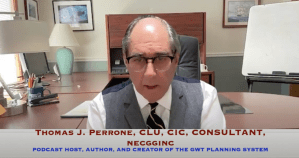
Thomas J. Perrone, CLU, CIC is the Founder and Principal of New England Consulting Group of Guilford, Inc., with over 55 years of experience serving business owners in Connecticut and New England. He specializes in advanced plan ning strategies including the GWT Planning System, business succession and exit planning, executive compensation, and wealth transfer.
Business Consultants of New England is a collaborative alliance of five independent specialists united around a single purpose: helping business owners grow, protect, and transition their businesses with confidence.
Free Report: Where You Are Report! You can’t plan the future if you don’t know where you are today. This report will help you define where you are today and where you are going with your business and estate economic future. FREE DOWNLOAD
| Schedule Your Complimentary Business Clarity Conversation
No cost. No obligation. Just clarity on where you stand and what you can do. Thomas J. Perrone, CLU, CIC tperrone@necgginc.com · 203-530-6615 · www.bpbpgrp.com |
© 2026 New England Consulting Group of Guilford, Inc. · Business Consultants of New England · All Rights Reserved.
[i] Ref: Cash Out Move On – John H. Brown publication This white paper draws on Chapter 6 of Cash Out — Move On to explain the concept of Value Drivers, why a strong management team is the foundation of business value, and what business owners with 5 to 50 employees can do — starting today — to build that value before they are ready to sell.

